Dealing With Hemorrhoids during Pregnancy

Hemorrhoids (piles) are swollen and inflamed veins in your rectal and anal region.

Hemorrhoids grow to the size of little raisins or grapes. Haemorrhoids can cause bleeding, itching and outright pain.


There are two types of haemorrhoids: internal and external. Internal haemorrhoids are painless and develop above the dentate line. External haemorrhoids are painful and develop below the dentate line.

Pregnancy Increases your Proclivity to Develop Hemorrhoids

Bleeding is the most prominent symptom of internal haemorrhoids. You won’t feel any pain. But you will notice bright red blood on your stool, tissue paper and in the toilet bowl.

You can tell that your hemorrhoids are external thanks to two prominent symptoms: pain and peanut-shaped protrusions in your anal region.

External haemorrhoids are itchy and painful because the exterior anal region is covered with pain receptors. Pain receptors are nerve endings which transmit pain signals to your brain.

Internal haemorrhoids are not painful because they develop inside the rectum and the rectal walls do not have pain receptors.
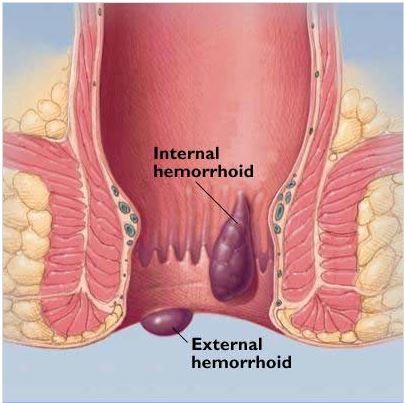

Hemorrhoids Diagram photo Hemorrhoidsdiag_zps94c315f7.jpg

You can diagnose your external hemorrhoids with the help of a mirror. You will be able to see the peanut-shaped outgrowths in your anal region. Theses outgrowths could be as little as raisins or as large as grapes. Their size depends on their stage of development.

Be careful with your diagnosis because internal haemorrhoids can also be seen externally. At an advanced developmental stage, internal haemorrhoids prolapse. Prolapsed internal haemorrhoids protrude outside the anus.

Why do Hemorrhoids occur more frequently during Pregnancy?

The exact cause of haemorrhoids is unknown. However, haemorrhoids are often associated with high intra-abdominal pressures.

The developing fetus amasses weight during pregnancy. The increasing weight continuously exerts ever higher pressures on the lower bowels. This pressure is the principal cause of hemorrhoids during pregnancy.
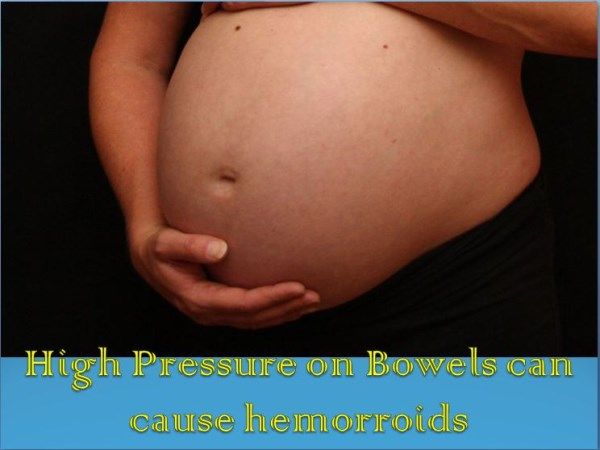

 photo HemorrhoidsoftenOccurDuringPregnancy_zps6cf342fc.jpg
Hemorrhoids Occur Often During Pregnancy

Your progesterone levels spike during pregnancy. Progesterone induces a relaxation of the veins; thus, making the veins more susceptible to swell under the slightest pressure.

Progesterone also slows down the rhythmic contraction and relaxation of your intestines during metabolism. This slow down can lead to constipation and constipation is a major cause of haemorrhoids.

Relief from Hemorrhoids

Hemorrhoids often disappear postpartum. Childbirth removes the cause of intra-abdominal pressures. Hence, the most natural remedy is just waiting till you give birth.

Of course, the downside to waiting is enduring the irritation and pain.

You can always get safe and natural relief with the help of 100% organic homeopathic treatments.


Safe Hemorrhoids Relief photo HemorrhoidsVenaprohorizontalbanner_zps44ffe824.gif

The advanced venpro home remedy is an all-natural treatment for hemorrhoids. Venapro is the certified choice of OBGYNs and gynaecologists because it deals with both the causes and symptoms.

You can greatly accelerate your recovery by making a few lifestyle adjustments. These adjustments are only effective, if implemented alongside venapro.

Do your kegel exercises regularly!

Kegel exercises increase the circulation of blood in your rectal region. Proper circulation in your anal and rectal region speeds up recovery and can even prevent the occurrence of haemorrhoids in the first place.

Secondly, kegel exercises strengthen your vaginal and urethral muscles; thus, facilitating healing after delivery.
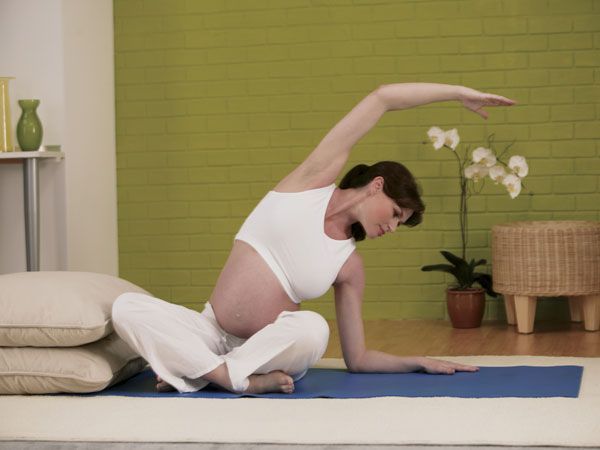

 photo KegelExercisesCanPreventHemorrhoids_zps89abd3a3.jpg

Take a sitz bath for 3 to 10minutes, thrice daily. You can convert your bathtub into a makeshift sitz bath or purchase one from your local drugstore. Warm water is recommended for sitz baths; however, some women have reported that, they experience a more soothing relief by alternating between warm and cold water.

You can also soothe your bum with ice packs, which have been saturated with witch hazel.

Stop straining during bowel movements. Take a dump, when you feel like it. You risk constipation, if you withhold your stool when, you feel the urge.

Maintain impeccable hygiene throughout pregnancy. Clean up with moisturized wipes, after a bowel movement. You can moisture the wipes with water or witch hazel. Above all, do not use perfumed toilet paper.

Lie down rather than sit, when watching TV. Avoid standing for extended periods as this serves to prolong the pressure on your lower abdomen. Excessive standing can also cause the varicose veins in your legs to swell.
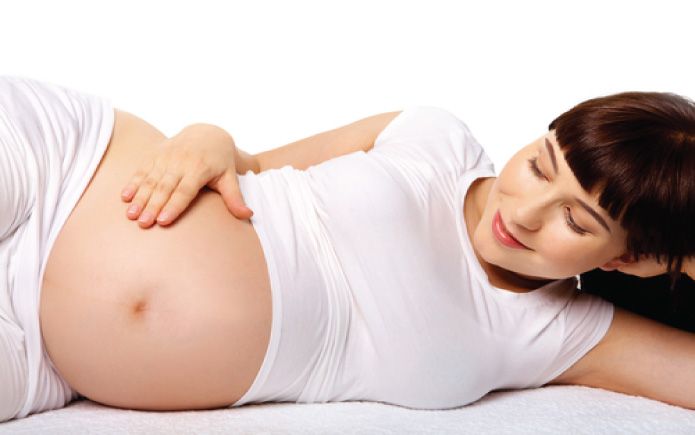

 photo SleepingonYourSideLowersPressureonBowels_zps4ae47df2.jpg
Sleeping on Your Side Lowers the Pressure on Bowels
When you go to bed, sleep on your sides instead of lying on your back. Lying on the back increases the pressure on the lower abdomen.

Include beaucoup high fiber foods in your diet. Eat plenty of fruits, vegetables, bread and beans. Insoluble fiber greatly facilitates your metabolism by retaining water. Drink plenty of fluids. Fluids make your stool soft and gelatinous.

There isn’t a better fluid than good, old water. Drink beaucoup water.
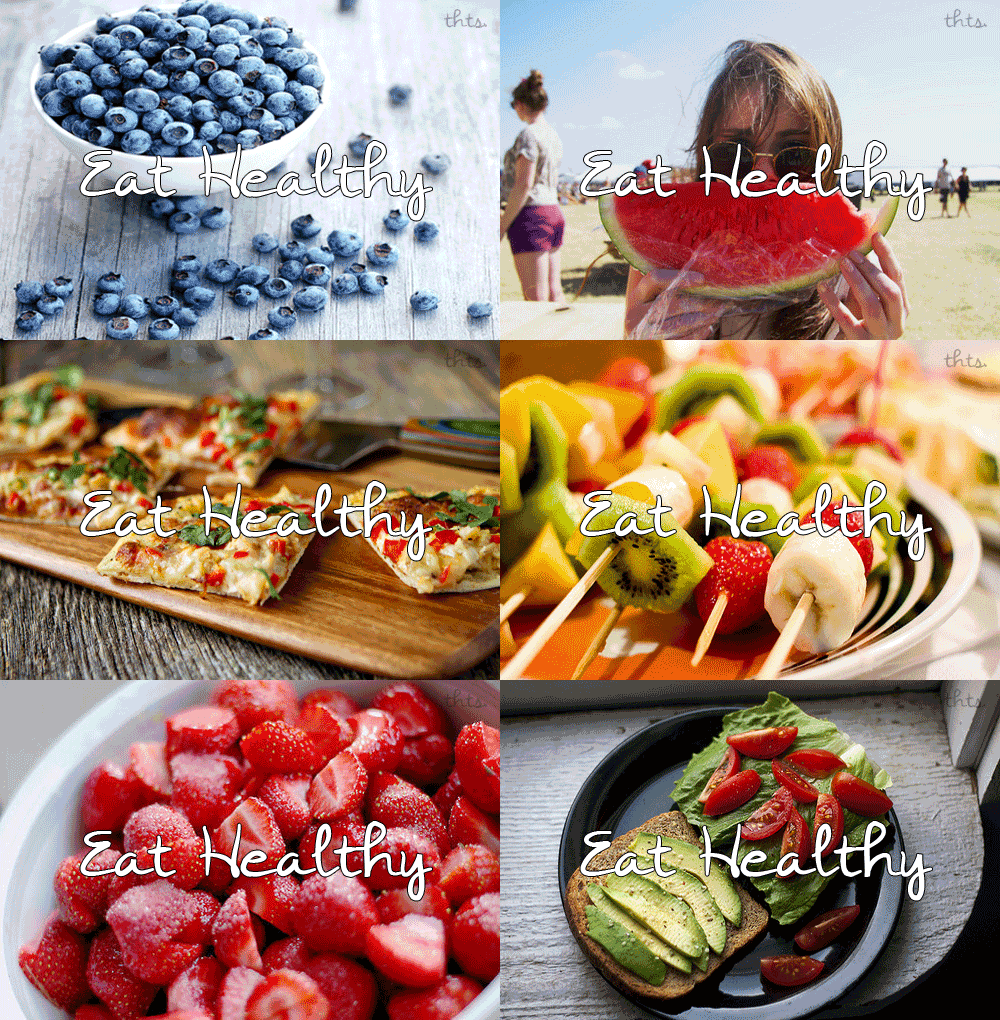

 photo eathealthy_zps79dd1523.gif

Implementing these effective tips in conjunction with venapro will relief you of hemorrhoids in no time.
Internal Hemorrhoids

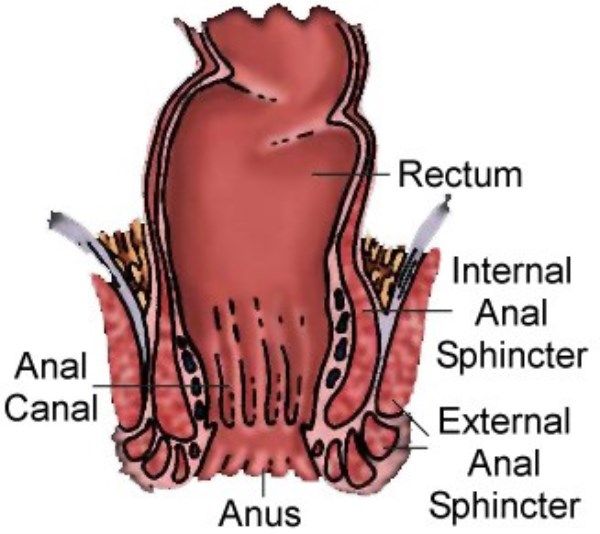
Internal hemorrhoids develop above the pectinate (dentate) line. The pectinate line is about 1cm from the anus.


Internal hemorrhoids (piles) are classified into 4 grades. Their classification depends on the degree of prolapse of the piles.


Anal Canal vs Anus - Hemorrhoids photo AnalCanalvsAnus-Hemorrhoids_zps5fa945fc.jpg
Diagram of the Anal Canal
Grade 1 and Grade 2 internal piles are located inside the rectum. Grade 1 internal piles are always internal. Grade 2 internal piles occasionally prolapse.


Prolapse is a medical term, which describes tissues that have dislodged from their normal anatomical position.


The most frequent occasions, in which, grade 2 internal haemorrhoids prolapse include stooping and bowel movements. The piles spontaneous retract after the occasion. For example, if the piles prolapsed because you stooped, they will immediately retract back into the rectum, when you stand up. If the piles prolapsed during a bowel movement, they’ll immediately retract when, you are through.


Grade 3 internal piles frequently prolapse. However, you can manually push them back into the rectum.


Grade 4 internal haemorrhoids are permanently prolapsed. You can manually push them back into the rectum, but they’ll immediately fall back out.


Grade 3 & 4 internal hemorrhoids are visible externally. You can see them by maneuvering a mirror about your rear. You run the risk of mistaking Grade 3 & 4 internal piles for external piles because they are both visible externally.


Therefore, you’ll need the know-how to answer the outstanding question:


View more presentations or Upload your own.


How can You Distinguish Internal Hemorrhoids from External Hemorrhoids?

Internal hemorrhoids are painless.


If you are in pain, you are probably dealing with external piles. There are two rare exceptions to this rule. Internal piles are painful, if they are thrombosed or necrotic.


Thrombosis is the blockage of circulation due to the clotting of cells in blood vessels.


Necrosis describes the death of blood cells.


Internal Hemorrhoids are painless photo InternalHemorrhoidsarepainless_zps85ad084f.jpg
Internal Hemorrhoids are Painless
The presence of bright red blood on your stool, toilet bowl and tissue paper is the most prominent symptom of internal hemorrhoid. Hematochezia is the medical condition, in which, your stool is smeared with blood. You may not conclude that, you have haemorrhoids on the exclusive basis of a blood smeared stool because a blood smeared stool is also the symptom for different conditions.


For example, bright red blood might be indicative of an anal fissure. Anal tears and fissures are relatively common. So, how can you tell that, you are dealing with internal haemorrhoids, not anal fissures?


Anal fissures hurt. If you are dealing with an anal fissure, you will feel pain during your bowel movements. Bright red blood plus pain probably indicates an anal fissure.


The presence of bright red blood without pain probably indicates internal piles.


Incidentally, the causes of piles and anal fissures are very similar. Stretching the anal sphincter beyond its elastic limit may result in an anal fissure. Anal sex is one activity which might cause an over-stretching of the anal sphincter. Constipation is the most frequent condition responsible for over-stretching the anal sphincter.


Doctor Addressing patient -Hemorrhoids0 photo DoctorAddressingpatient-Hemorrhoids0_zps5c4a3e29.jpg
Consult Your Doctor
You have a more serious condition, if your stool is smeared with darkish blood. You could be dealing with a bowel disease or anal cancer. Consult your doctor immediately.


Again, internal piles are not painful. However, grade 3 & 4 internal piles might itch and hurt. Pain and itchiness are common for prolapsed internal piles.


You see, grade 1 & 2 internal piles neither itch nor hurt because they are inside the rectum and the rectum is not really skin. The rectum has neither pores nor sebaceous glands.


On the other hand, the area immediately outside the anus is skin and it is abundantly served by nerve ending and pain receptors. When piles prolapse (in Grade 3 & 4), they rub against this sensitive region, causing pain and irritation.


Your piles could aggravate to the point where surgery becomes the only treatment option. And surgery comes with a host of medical complications. Hence, you should seek treatment ASAP.

Causes of Internal Hemorrhoids

Internal hemorrhoids are caused by high intra-abdominal pressures. Several occasions could give rise to high intra-abdominal pressures.


Causes of Internal Hemorrhoids photo CausesofInternalHemorrhoids_zpse9c0a9e7.jpg
Causes of Internal Hemorrhoids
Do you overstrain during bowel movements? If you do, you might just be responsible for your condition. Imagine the tremendous pressure all that pushing exerts on your lower bowels!


Some guys hold their breaths and push like they are about to give birth to twins. Do not be surprised, if babies don’t pop out. You are more likely to birth small peanut-shaped outgrowth in your rectal region.


Constipation and diarrhea are among the leading causes of piles.


Low fiber diet. A low fiber diet reduces the efficiency of your metabolism. Without sufficient fiber in your diet, a disproportionately high amount of fluids gets absorbed as your food moves through your intestines. By the time the digestive by-product arrives at your rectum, it is very dry and stony. It passes only with difficulty and often under enormous strain.


Picture an obese person. Imagine the pressure of those accumulated layers of abdominal fat pressing upon the lower abdomen. If the weight of an elephant is constantly pushing against your lower bowels, haemorrhoids are not far away.


Lack of regular exercise is an often cited cause of piles. Regular exercise improves the circulation of blood and renders your metabolism more efficient.


Flat Stomach Exercises Prevent Hemorrhoids photo FlatStomachExercisesPreventHemorrhoids_zpsf1b4a921.jpg
Regular Exercise Prevent Hemorrhoids
Abdominal muscles are not exclusively prized for their aesthetic value. A flat tummy helps keep your vital organs in their normal anatomical position. This reduces your susceptibility to contracting hemorrhoid by improving your metabolism. Now you have an additional reason to tone your abs, till those chocolate bars manifest in all their glory.


Pregnant women undergo two important changes: one is physiological and the other is anatomical.


The physiological change is an increase in the production of oestrogen (estrogen). The hormone, oestrogen causes the walls of veins to relax. At this relaxed state, veins become more vulnerable to swelling and inflammation upon the slightest abnormal pressure.


The anatomical change is the increasing weight, which the developing fetus exerts on the lower abdomen.


The next time you see weight lifters at work, pay close attention to the phases of lifting. You’ll notice that, they have to hold their breath and contract their muscles to breaking point.


As you saw in the video, it is not some far-fetched theory. Weight lifting brings incredible pressure to bear upon the lower abdomen.


Professional weight lifters frequently suffer from hemorrhoids.

Remedy for Internal Hemorrhoids

It is quite possible for your piles to go away by simply altering your diet. An increase in your fiber intake alone can bring relief from hemorrhoid.


Pregnant women often recover from piles after delivery.


Not everyone is fortunate to get relief without medication. It is highly unadvisable to assume that your condition will improve without medication.


Venapro is the most effective home care remedy for hemorrhoids.


You can order the 100% organic venapro formula over the internet without prescription.


Hemorrhoids cure venapro photo venaprohemorrhoidsremedy_zps4cc86c5d.jpg
Venapro is highly recommended by doctors because it treats both the causes and symptoms of haemorrhoids.


Most people think that, venapro is some kind of topical cream or ointment. Venapro is neither. Venapro is completely oral.


Topical creams present obvious disadvantages. The cream might fail to penetrate your skin for one. In addition, there is the pertinent aggravation of being forced to wash your hands, each time you apply the cream on your anal region.


The advanced venapro formula is delivered in two bottles. One bottle contains tablets and the other contains an aerosol to be sprayed twice under the tongue, three times daily.


Safe Hemorrhoids Relief photo HemorrhoidsVenaprohorizontalbanner_zps44ffe824.gif
Order venapro right away and it will be swiftly shipped out. In about 48hours, you will be saying goodbye to hemorrhoids.